
Importing Heat Treatment Residual Stress into Loading Simulation

Residual stress, carbon profile, and phase volume fractions are all important considerations when modeling a loading condition for a steal part after heat treatment. ANSYS Mechanical and the DANTE material model subroutines can be used to predict and import results such as residual stress, carbon profile, and phase volume fraction into a loading model.
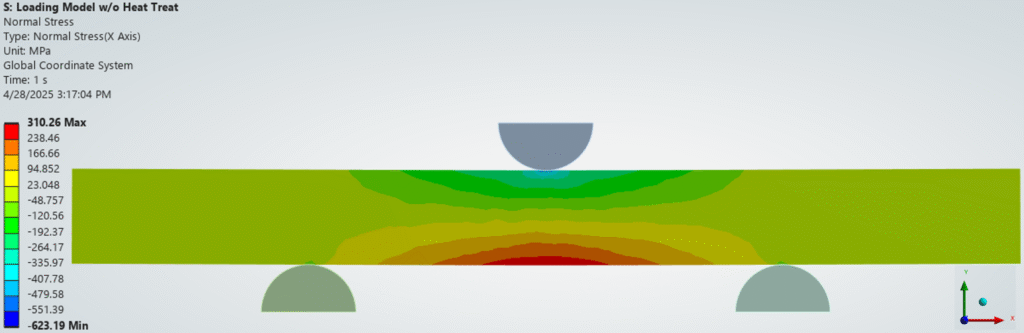
Figure 1: Loading Model without Importing Residual Stress, Carbon, Phase Volume Fraction
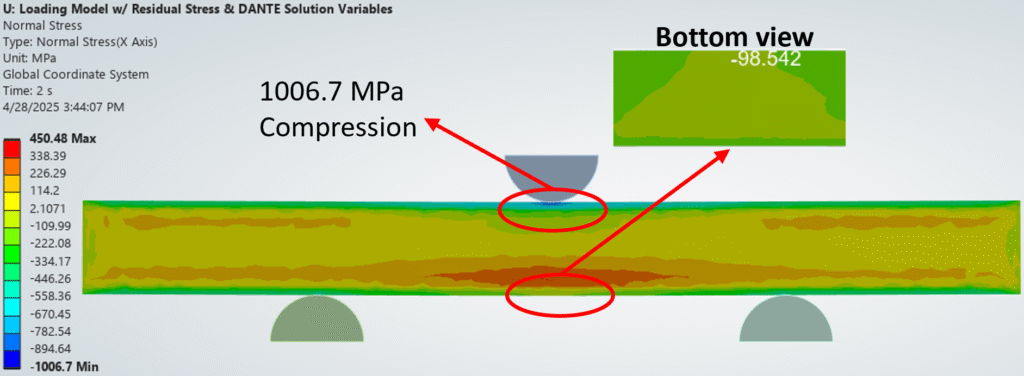
Figure 2: Loading Model with Importing Residual Stress, Carbon, Phase Volume Fraction

By mapping in the residual stress from heat treatment, the residual compressive stress on the surface is a lot greater since it is the combination of the compressive residual stress and loading stress. However, the residual compressive stress counteracts the tensile stress on the bottom surface of the midsection which reduces the overall bending stress.
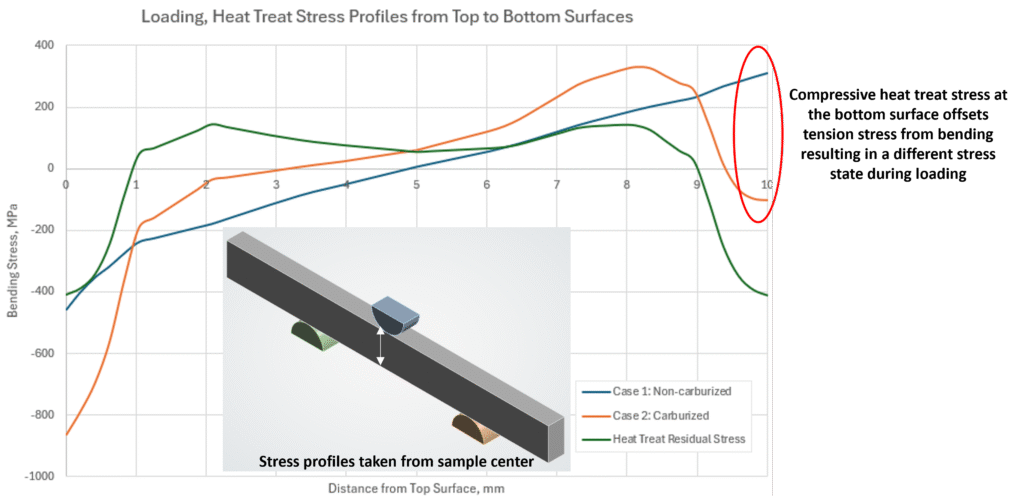
Figure 3: Residual Stress Profile at the Midsection after Heat Treatment, Loading Model Considering RS, and Loading Model without Considering RS


Student/Trial License

Learn heat treatment. Explore simulation.

Start with the DANTE Student’s Guide to Heat Treating, a quick reference covering the fundamentals of heat treatment, steel microstructures, and common processes. Ready to go further? Get hands-on experience with DANTE through our student/trial license and explore real-world heat treatment simulations.

resources

Research Ft DANTE

Explore published articles from professionals who’ve used DANTE in their scientific research.

Talk with our experts

Have a project or a question about heat treating? Connect with our engineers for to discuss how DANTE can fit into your workflow.

DANTE latent heat during austenitizing

tools for heat treatment modeling

See how the DANTE suite enables engineers to simulate quenching, distortion, hardness, stress, and metallurgical phases

Proven industry results

Explore our case studies showing how DANTE FEA predicts distortion, hardness, phase changes, and residual stress.